The Thunderbolts: Sacramento Before the Spotlight
The Thunderbolts started with a fairly practical idea: get Sacramento’s car guys together and find somewhere to race where the police weren’t part of the event.
That was 1945. There were cars to finish, engines to sort out and the usual disagreement over whose roadster was better. Within that crowd were people who would help establish Sacramento’s custom-car reputation—and start a show that gave everybody else a chance to weigh in.
Some things take longer to settle than others.
The friendships had roots around Jack Stack’s Flying A station at 18th and L Streets. Harry Westergard and Norm Milne were among the young men associated with the gathering place, with Dick Bertolucci becoming part of that developing Sacramento circle. If you were interested in modified cars, you went where you could find them. Nobody needed much encouragement to lift a hood.
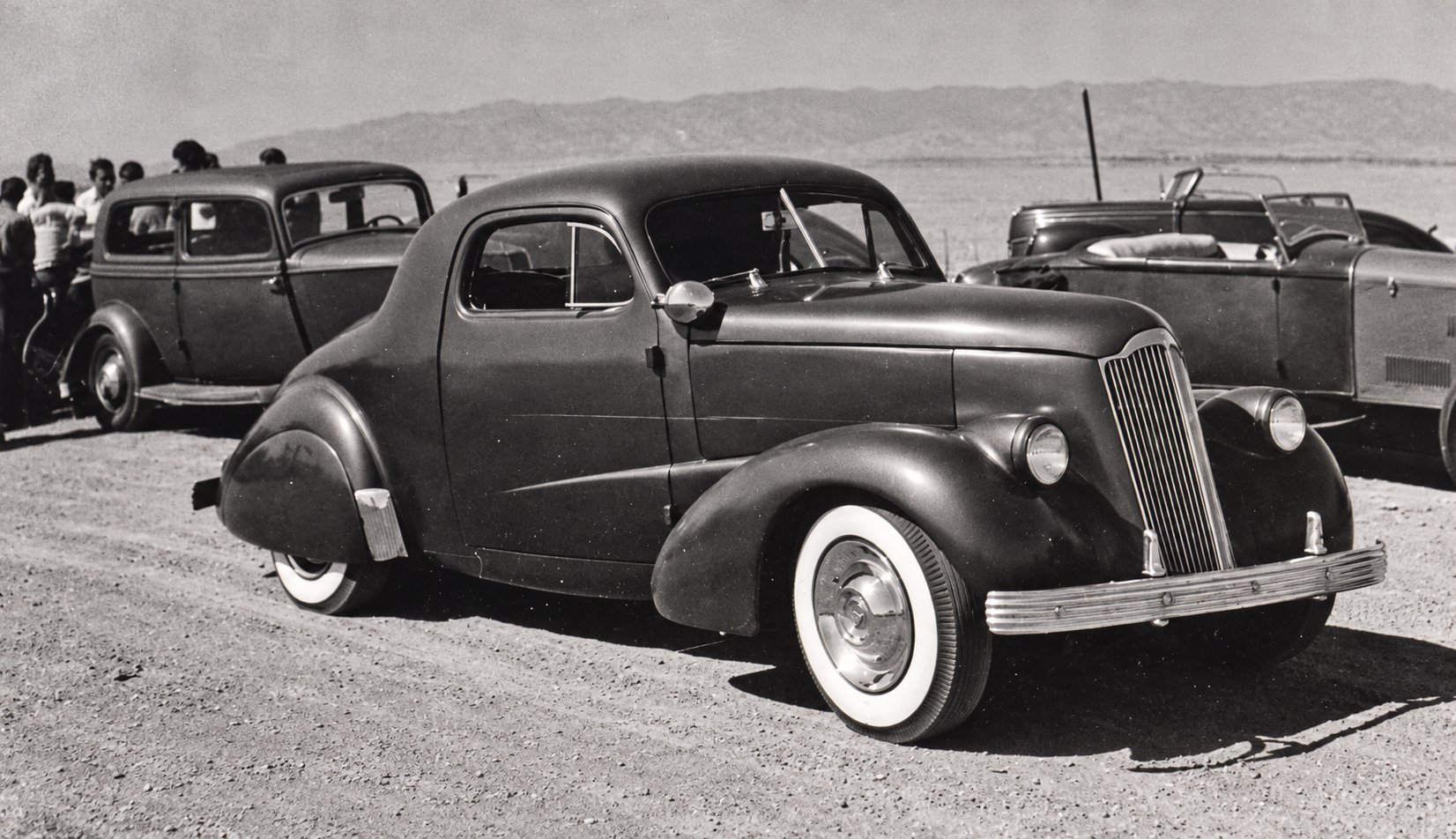
Westergard was already finding ways to make everyday automobiles look remarkably graceful. A different grille, a lowered roof, a body relieved of unnecessary trim—the changes worked together. His influence reached a young George Barris, who watched and learned before carrying his ambitions south. Sacramento’s ideas were getting around.
When car activity picked up after the war, the crowd had fresh energy and the same old problem: a fast roadster was considerably more enjoyable when you had somewhere to use it.
Milne had seen the Southern California dry-lakes scene and understood what clubs could accomplish. He became the first president of the Capitol Auto Club, with Westergard and Bertolucci closely associated with its formation. The familiar account places an early meeting in Westergard’s chicken-coop workshop on Fulton Avenue, although surviving records differ over the exact founding arrangements.
Bertolucci was only sixteen that year. It is easy to forget that when looking back at a man whose name eventually became a standard for craftsmanship. At the beginning, he was a teenager with a long working life ahead of him.
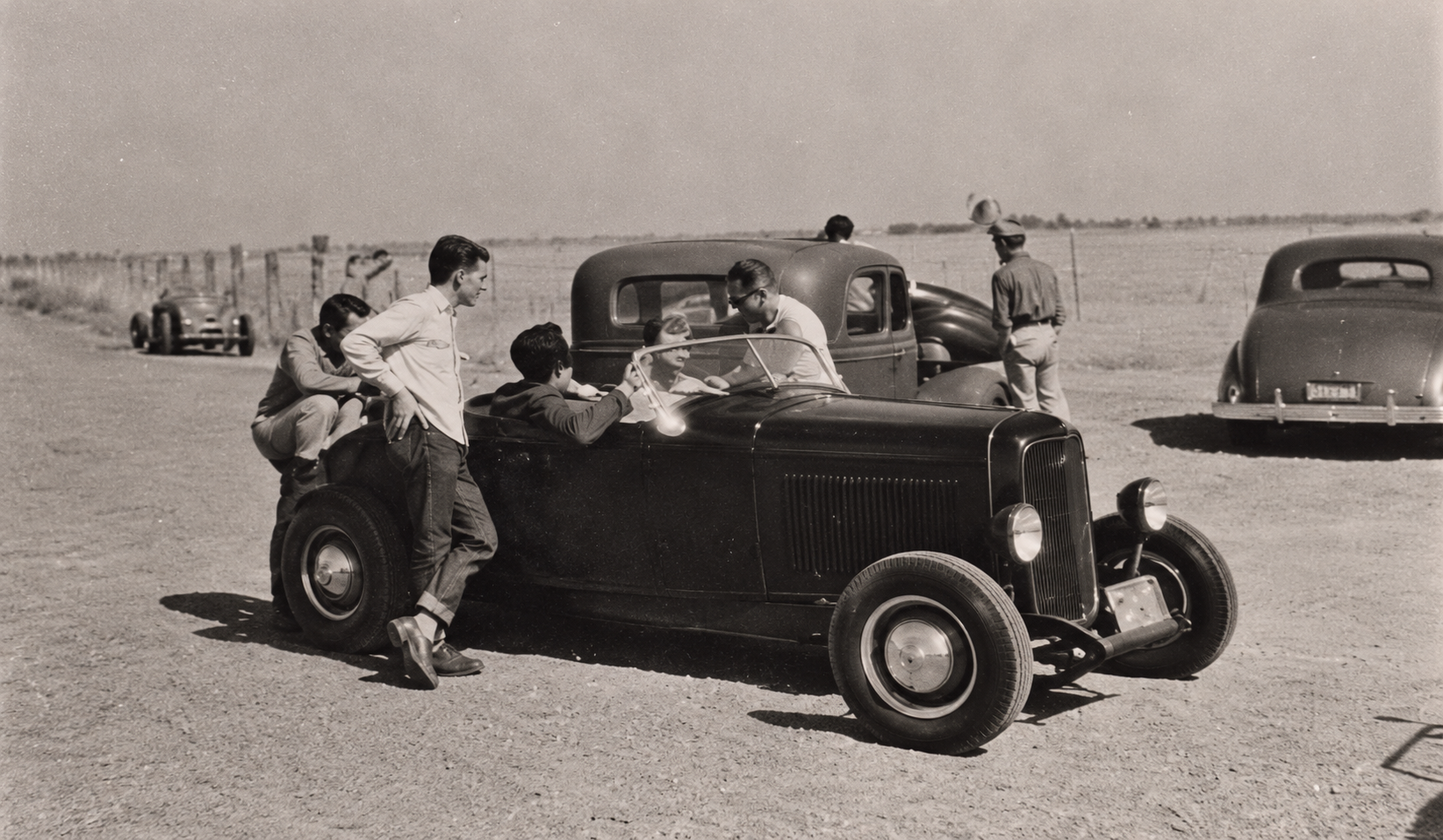
The club became known as the Thunderbolts, a name that suited the machinery rather well. Their early racing was informal. Later accounts describe cars and motorcycles gathering at Davis-Winters Field as early as 1946, without official permission, timing equipment or a fixed distance. Two machines ran until somebody had made his point.
Fortunately, there was more to discuss than speed.
Roadsters and customs shared the same circle. Westergard worked on both, and Bertolucci’s growing skill would help turn local automobiles into cars people remembered for decades. Around them were owners willing to spend what they had—and sometimes what they hadn’t quite earned yet—to get their cars right.
Jerry Fassett was one of those owners. When Kustomrama interviewed him in 2019, he recalled joining as member number seventeen and remembered meetings at Stan’s Drive-In. His recollections bring the Thunderbolts back into a town full of young people who knew one another, admired one another’s cars and occasionally borrowed an idea.
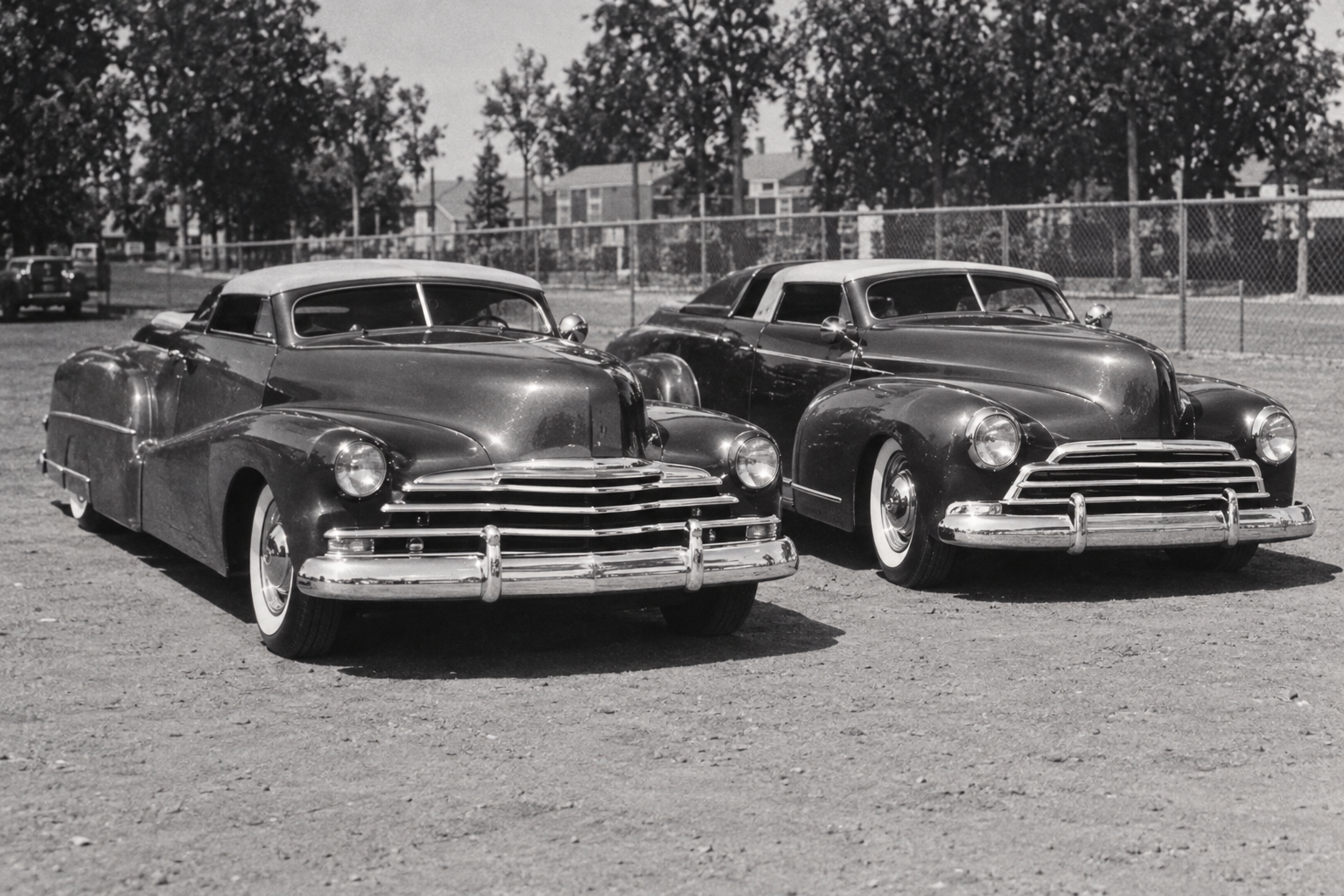
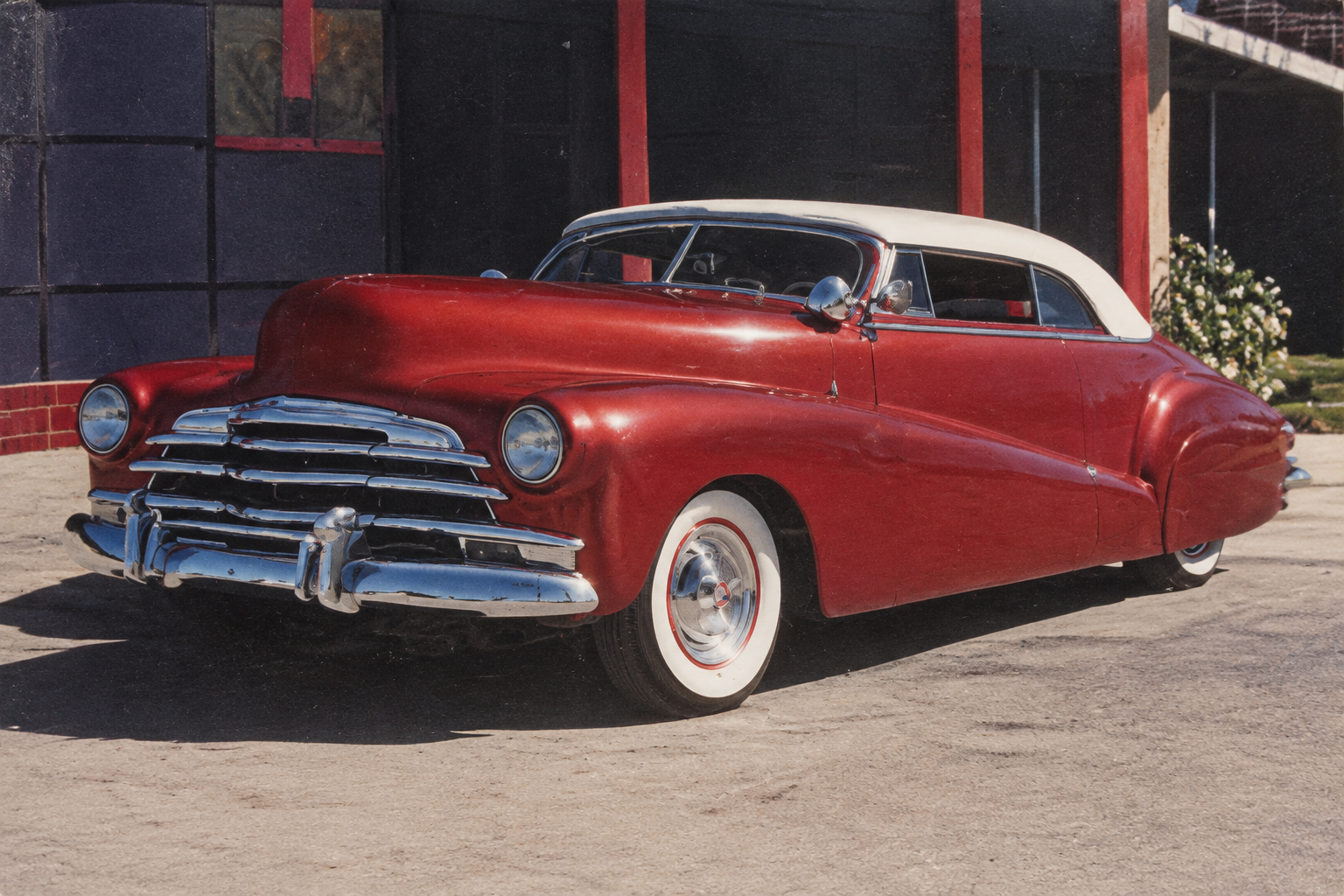
Fassett bought a nearly new 1947 Chevrolet convertible after returning from military service. It was a straight, low-mileage car when he got it. Then he saw Butler Rugard’s custom Chevrolet and began thinking about fadeaway fenders.
That is how these things tend to happen. You can be perfectly satisfied with your car until somebody parks a better idea beside it.
Westergard installed Jimmy Summers fender extensions on Fassett’s Chevrolet. Bertolucci painted it. Fassett remembered twenty-one coats of custom-mixed lacquer with gold in the finish—a detail that tells you how far the car had traveled from being a sensible used Chevrolet.
His photographs show the car changing as the work progressed. These weren’t automobiles built to illustrate a history book. They were somebody’s transportation, pride and considerable investment of spare money.
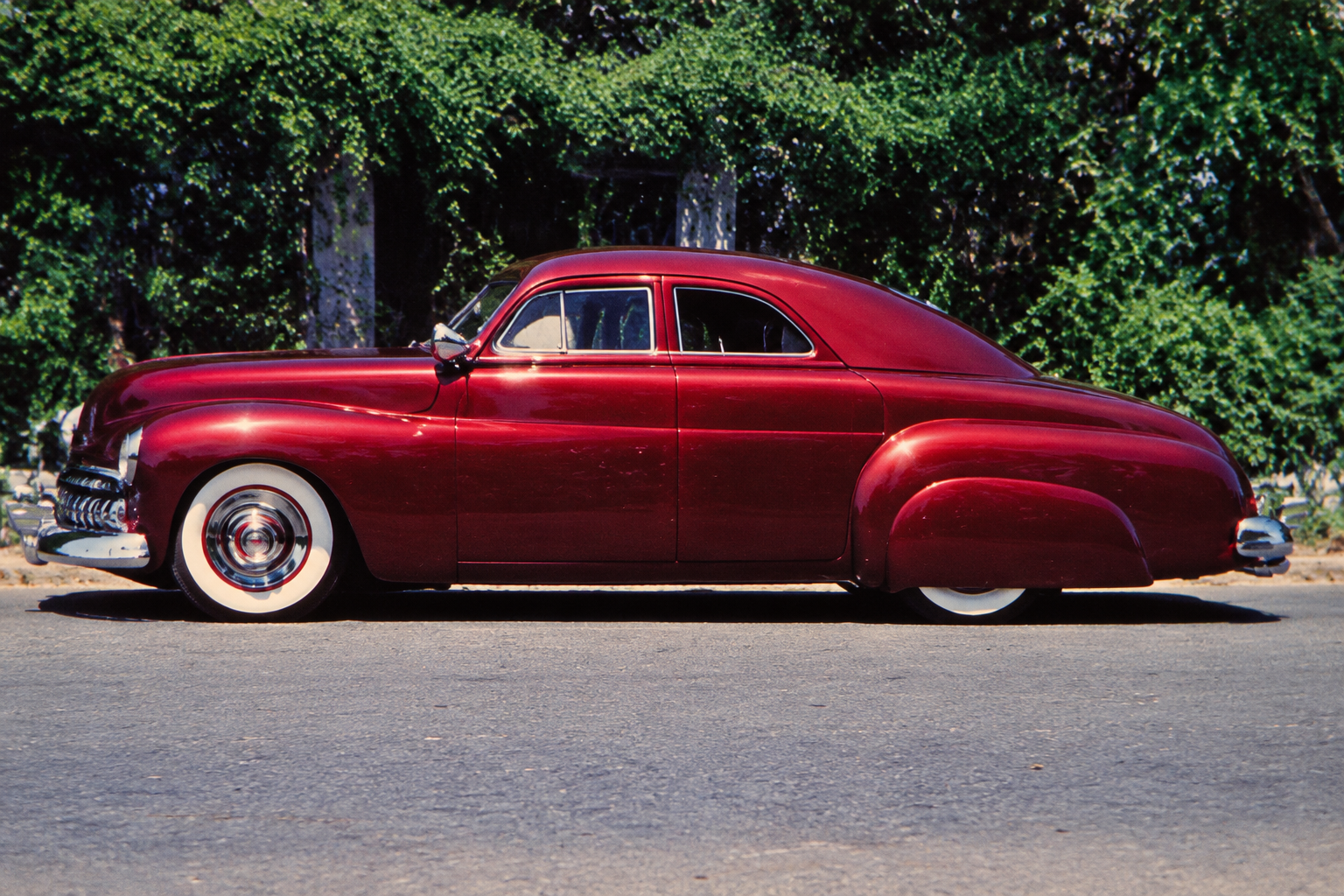
Buddy Ohanesian’s 1940 Mercury is perhaps the best-known example of what that Sacramento circle could produce. Westergard contributed to its early custom work; Bertolucci made the removable steel roof that helped give the finished Mercury its extraordinary shape. A surviving 1975 Autorama program credits Bertolucci with the roof and deck-lid work and Westergard with the grille and recessed license plate.
Look at the roof and it seems to belong there. That is the remarkable part. A great deal of cutting, fitting and shaping disappears into a car that looks as though it simply grew that way.
With work like that happening around them, the Thunderbolts had plenty worth showing. They also had opinions.
According to the familiar account, Norm Milne, Buck Davis and Lawrence Brocchini were discussing who had the nicest roadster when Harold “Baggy” Bagdasarian suggested holding a show and letting the public look them over.
It was an ambitious way to settle a garage argument.
On November 4 and 5, 1950, twenty-two cars gathered in the service area at Capitol Chevrolet, at 13th and K Streets. That small club event became the beginning of the Sacramento Autorama.
Twenty-two cars. You could take your time with that show. Walk around a roadster, study a custom, ask its owner what he had changed. Then go home with something new to try on your own car.
Bagdasarian recognized the possibilities. The show grew, adopted the Autorama name in 1953 and eventually moved to Cal Expo in 1970. Sacramento had acquired an enduring showcase for the kind of work its car people had been doing all along.
Still, the early photographs tell the story best. Behind every famous car is a moment when it was being figured out. Beside it is somebody who probably wanted to get it finished and take it for a drive.
They had no way of knowing how closely people would study those cars eighty years later.
They were busy getting them ready for the weekend.